
A sustainable building material choice only counts when the procurement team can prove it.
For developers, architects, and procurement teams, green steel for construction means checking more than a lower-carbon claim. The steel you procure has to fit the drawing, grade requirement, test report, certification, delivery schedule, and site use.
That is where GreenPro-certified steel becomes relevant. It gives different teams working on a construction project a definite way to connect material selection with sustainability documentation, consultant review, client discussions, and handover records.
In this guide, we’ll explain how green steel fits into construction procurement, what buyers should check, and where ELEGANT Steel’s GreenPro certification supports the decision.
What green steel means for construction buyers
Green steel means steel backed by lower-impact manufacturing practices, cleaner process choices, and credible sustainability documentation.
For a construction buyer, the term should lead to practical checks. What certification supports the claim? Which product does the certificate cover? Does the steel meet the required grade and project application? Can the supplier provide documentation during procurement review?
A sustainability claim gains value only when the team working on a specific project can verify it. Developers, architects, consultants, and procurement heads need proof that can sit in material approval notes, tender files, client presentations, and handover documents.
Green steel has to answer two questions at once. It should support a lower carbon footprint, and it should meet the structural need of the building.
Why steel choice affects a project’s carbon footprint
Steel is used in large quantities across residential, commercial, industrial, and infrastructure projects.
A high-rise may need steel in reinforcement, columns, beams, slabs, staircases, and basement work. A warehouse or factory may need structural steel for construction, including beams, columns, channels, and frames. Public buildings such as schools, hospitals, and transport facilities carry their own steel requirements.
When a project buys steel at scale, the production route, energy use, process control, and certification behind that steel become part of the project’s procurement and handover documents.
This is why green steel has moved from a branding topic to a procurement topic. The purchase team has to look beyond rate and availability. It has to check whether the material supports the project’s sustainability goals while protecting quality, supply, and site execution. You must make the purchase from an authorized dealer.
Certification gives sustainability claims proof
Green steel needs documentation that a project team can use.
A builder may hear several claims around sustainable materials. Some sound impressive at first glance.
The better check is proof. Certification gives architects, consultants, developers, and procurement teams something concrete to review before the material reaches site.
GreenPro is one such certification used for environmentally responsible products in building and construction material selection. For teams working on a construction project, it helps turn a sustainability claim into a document-backed procurement point.
This certified tag becomes useful during design review, vendor selection, consultant discussions, and client-facing project documentation. A certified product gives the team a clear way to explain why a specific material was chosen.
For bigger projects, this proof can also support internal procurement records, green building discussions, handover documents, and buyer confidence.
What buyers should check before choosing green steel
A green steel decision should begin with the project requirement.
The procurement team should check whether the steel fits the application. Reinforcement steel, structural steel, beams, channels, and columns serve different jobs. A sustainability certificate should work alongside grade, size, strength, and delivery checks.
Before specifying or buying green steel, check:
- GreenPro or relevant sustainability certification
- Product grade and application fit
- BIS and IS alignment where applicable
- Test reports and product documentation
- Diameter or section availability
- Consistency of supply
- Delivery schedule and lead time
- Project-stage dispatch planning
- Supplier credibility
- Fit for reinforcement or structural use
This list keeps sustainability connected to actual construction needs. A strong procurement file should show why the steel fits the building, how it supports the project’s sustainability goals, and whether the supplier can meet the site schedule.
Green steel still has to perform at site
Sustainable steel earns trust when it performs during construction.
Steel has to bend, weld, tie, hold shape, bond with concrete, and reach the site on time. A green material choice should protect strength, ductility, bendability, fabrication quality, and delivery planning.
For reinforcement work, engineers may check grade, bar diameter, ductility, bend properties, and bond with concrete. For structural work, the focus may shift to sections, load transfer, fabrication accuracy, bolting, welding, and dispatch.
This is where procurement, engineering, and site teams need to work from the same steel specification. A material that looks good during approval still has to fit the drawing, design load, project schedule, and construction sequence.
Green steel should support both project records and site execution.
Where green steel fits on real projects
Green steel can be used in both reinforcement and structural steel packages.
Steel bars for construction sit inside concrete members such as footings, columns, beams, slabs, staircases, and foundations. Structural sections may be used in warehouses, commercial structures, industrial buildings, solar support structures, bridges, and other steel-heavy work.
For a developer, the benefit starts during planning and material approval. For a contractor, it shows up during supply planning, dispatch coordination, unloading, fabrication, and site use. For a client or buyer, it becomes part of the project’s record of construction materials.
A school, hospital, warehouse, apartment block, or commercial building may all need different steel products. The buying logic stays similar: check the application, confirm the grade, review certification, plan dispatch, and keep the documentation ready.
Steel is one of the bigger material decisions in many building projects, so its certification and source deserve early attention.
Where ELEGANT Steel fits into sustainable construction
ELEGANT Steel holds GreenPro certification, giving project teams a clear sustainability marker during material selection.
For developers, architects, and procurement teams, this matters because sustainable building decisions need proof. A GreenPro-certified steel supplier can support material approval, consultant review, client discussions, and project documentation.
ELEGANT Steel is also a primary steel company, which matters for buyers who care about process control, material consistency, and traceability. Integrated production helps a steel supplier keep stronger control over raw material flow, steelmaking, rolling, quality checks, and dispatch planning.
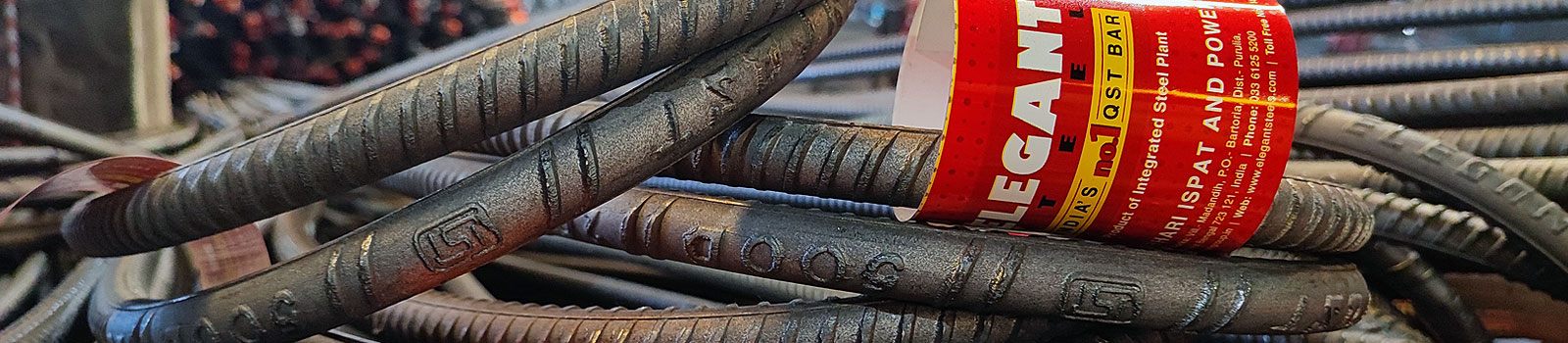
The brand also manufactures ELEGANT Steel 550D QST Bars for concrete reinforcement. QST means Quenched and Self Tempered. For construction teams, this connects the sustainability discussion with grade, strength, ductility, bendability, weldability, and suitability for concrete structures.
A greener steel choice should help the engineer, procurement team, and site team plan approval, dispatch, and site use with fewer gaps.

