
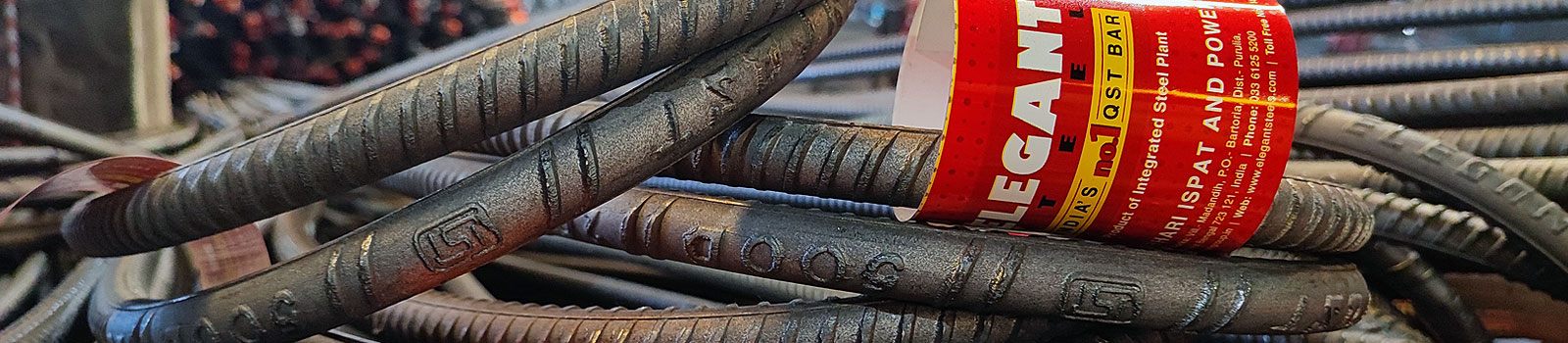

A steel delivery may reach your site with an invoice and test certificate, yet the project team still has several details to confirm. If you handle procurement, begin with the approved grade and diameter, the manufacturer’s identification, the applicable BIS Standard Mark, the test certificate, and the supplier invoice. These details should be in sync with the purchase order and the steel unloaded at the construction site.
Primary steel tells you how the material was produced, while the bar markings and records help you check whether the finished product suits the project. This distinction gives the team a clear place to begin before cutting, bending, or payment approval moves ahead.
Primary steel and product compliance answer different questions
Primary steel refers to steel made from basic raw materials such as iron ore and coal through an integrated production process. The steel manufacturing process usually covers ironmaking, steelmaking, casting, and rolling under a controlled manufacturing process.
A Primary Steel Producer certificate can support the claim about the production process. The TMT bars need to match the structural engineer’s specification, the applicable product standard, and the records supplied with the delivery.
Many procurement teams compare primary steel producers in India on price, availability, and delivery time. A more complete review also looks at the specified grade, permanent markings, BIS licence details, test certificate, and cast or lot reference. These checks separate the manufacturing claim from the suitability of the bars supplied for the project.
The project specification comes before the steel order
The structural engineer’s approved documents decide which reinforcement your project requires. The drawing and the Bar Bending Schedule (BBS) record the bar grade, diameter, shape, cutting length, quantity, and location across footings, columns, beams, slabs, staircases, and other concrete work.
When you order steel bars for construction, the purchase order can carry the same grade and size mix shown in these documents. It can also state the agreed bar length, piece count, delivery stage, and supporting records required with the consignment.
A footing pour may need several diameters, while column work may call for a different combination a few days later. When procurement follows the BBS, the cutting yard receives the bars needed for the planned work. The contractor can then organise storage options, labour, bending, and casting with few last-minute changes.
Bar markings should match the bundle details
Permanent markings on each bar provide the site team with a clear physical link between the reinforcement steel and its manufacturer. As per applicable BIS requirements, these markings may identify the manufacturer’s brand or trademark, the bar grade, and details associated with the manufacturing licence. Checking these markings against the bundle details helps the site team verify the material before it is used.
A bundle tag can provide additional information such as bar diameter, quantity, cast or lot number, and dispatch details, depending on the manufacturer’s identification system. Before the material is placed in storage, the site team can cross-check these details against the purchase order and delivery documents.
Visual features such as surface colour, shine, or rib pattern should not be treated as sufficient proof of material identity. Bar markings and bundle records offer a more reliable reference for verifying the delivery. Maintaining clear identification is also helpful when bundles are moved within the site or separated for use in different structural elements and casting stages.
The test certificate should correspond to the delivered lot
A Mill Test Certificate (MTC) provides useful verification when it can be directly linked to the reinforcement bars delivered to the project. For reinforcement steel covered under IS 1786, the certificate may include details such as the Standard Mark, cast or lot number, grade, bar size, and relevant test results.
Depending on the manufacturer and certification format, the MTC may also present chemical composition and mechanical properties, including yield strength, tensile strength, elongation, and bend test results. The project team can cross-check the cast or heat number, grade, diameter, quantity, test date, and order references against the bundle tags, bar markings, and invoice.
When these details match, they establish a traceable connection between the certificate and the physical steel received at the site. This gives the quality team, consultant, and accounts team a common set of records for reviewing the material and reduces dependence on verbal confirmation from the supplier.
The invoice should match the delivery records
A clear supplier invoice helps the project team trace the steel after it reaches the site. It can record the seller, manufacturer or brand, grade, diameter, quantity, dispatch date, and buyer details.
This record becomes useful when the quantity at unloading differs from the order, a certificate needs clarification, or a bundle tag becomes difficult to read after storage. Buyers comparing primary steel manufacturers in India can ask each supplier for a similar set of records, making the review easier across quotations and deliveries.
Price remains an important part of the purchase decision. However, incomplete records can consume additional time during inspection, payment approval, consultant review, or replacement discussions. A lower quoted rate offers limited value if gaps in documentation create delays later.
Site acceptance covers quantity and physical condition
The delivery itself needs a check before the bars enter the cutting yard. Your team can confirm whether the diameters and piece counts match the order, whether bundles remain separated by size, and whether identification stays readable after unloading.
The bars should arrive in a condition suitable for measuring, cutting, bending, tying, and fixing. Deep pitting, serious handling damage, mixed diameters, or missing tags call for a closer review with the site engineer and supplier before work begins.
The TMT bar sizes ordered should match the requirements of the upcoming construction stage. Stocking bars for a later slab while a required footing or column diameter is still unavailable can disrupt the work sequence. Checking quantities and sizes stage by stage helps keep reinforcement ready for the planned casting work while reducing unnecessary shifting and handling at the site.
Before the Steel Reaches the Cutting Yard
Primary steel becomes easier to verify when the purchase order, bar markings, test certificate, lot details, invoice, and delivered material carry matching information. Checking these records before cutting begins helps the site team confirm the grade, sizes, and source of the steel supplied for the project.
We produce Fe 550D QST bars through an integrated primary steelmaking route using iron ore and coal as basic raw materials. Our bars are manufactured in line with IS 1786 requirements through BIS-certified manufacturing. Project teams can check the available diameters and supporting product documents while preparing the steel order.
You can speak with us before placing the order if you need clarity on available sizes, product documents, or delivery timing for the next construction stage.

