
House construction involves two aspects, the main structure and the interior. The main structure includes the foundation, beams, slabs, and roof, while the interior includes staircase, windows, doors, etc. The main structure provides strength and stability to the construction, while the interior is for aesthetic purposes. Most construction is steel-based nowadays, and the type and quantity of steel required vary by element. This makes it essential for buyers to know the products required before purchasing. It eliminates the risk of incorrect selection and saves time and money.
Know the Various Types of Steel
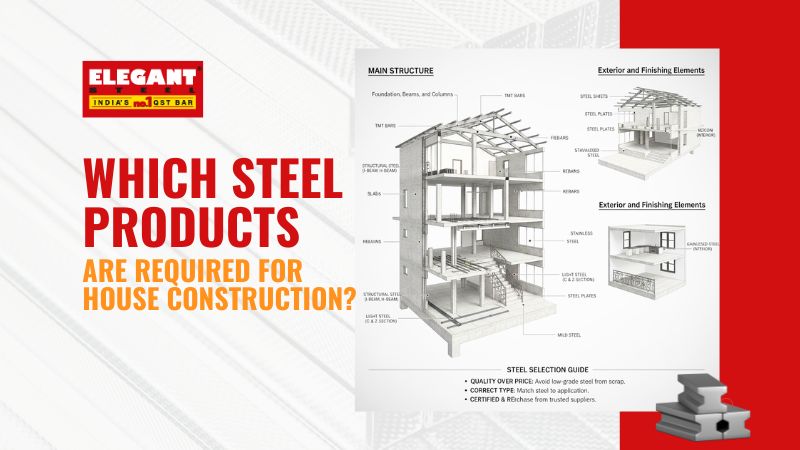
Structural integrity
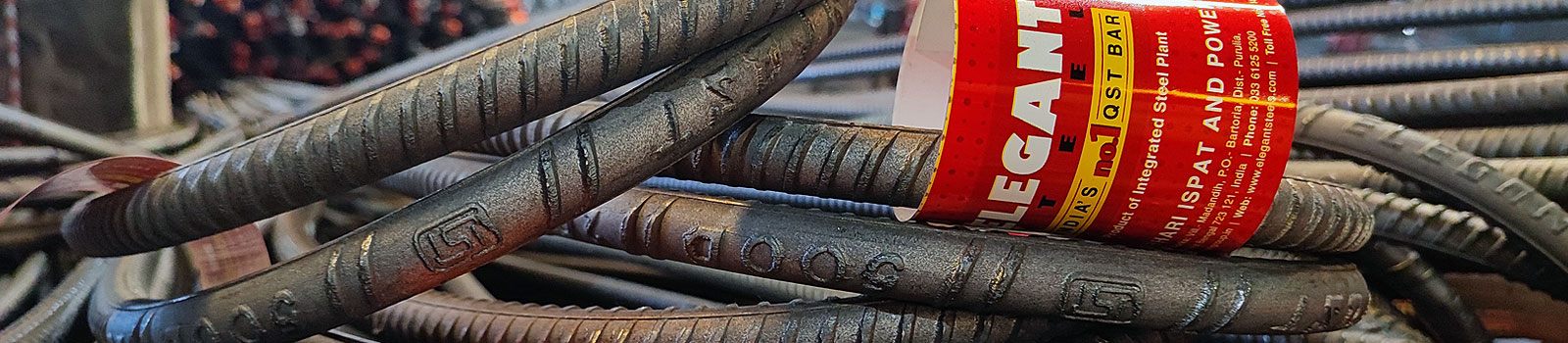
- TMT bars: These are made by mixing concrete into ribbed bars to increase their strength and withstand seismic activity.
- Structural steel: This is primarily used in beams and columns, which provide the house with a basic framework.
- Light steel: These are lightweight and strong and are usually used in studs and joists.
Exterior and finishing element
- Stainless steel: This is usually used in kitchens and decorative structures for anti-corrosion.
- Galvanized steel: The steel is coated with zinc for added resistance against corrosion.
- Steel plates are often used in windowpanes.
What are the different steel varieties used in different elements of the house?
Foundation, beams, and columns
- Rebars are widely used in construction. Either deformed bars, such as the thermo-mechanically treated bars, or plain rods are used. Concrete is added to all compartments to maintain their stability.
Structural steel
- The I-beam is used in beams for horizontal support.
- The H-beams, also called universal columns, provide vertical strength to the bars under high compression.
- Hollow sections have circular and rectangular tubing. This can be used in columns.
- Fixtures- The different steel components are held in place by nuts and screws.
Slabs
- Reinforcing bars: Here, the rods are placed in a mesh pattern to withstand thermal changes.
- Welded wire: This is used to space the bars in slabs.
- Steel Decking: This often serves as the base of the concrete, thus accelerating the construction process.
Roofing
- Structural steel: Large-scale projects use it to form their framework.
- Sheets: These have a corrugated appearance that protects against various weather conditions.
- Light steel: These are lightweight, framed in C or Z sections for roofing.
Staircases
- TMT bars: Concrete is added along with them in the stair slabs to take the weight of the footings and columns.
- Mild steel: This is malleable and used in designing steel components.
What mistakes should you avoid while purchasing steel?
- Always prioritize quality over price. Low-priced steel made from scrap affects the structure’s safety.
- Do not choose the wrong steel type for your project. This will lead to inconsistent performance of the bars.
- Always purchase certified products to ensure their authenticity.
- Get the products from a reliable supplier.
- Never ignore visual inspection; it helps eliminate purchasing steel with dents and rust.
Choose the appropriate steel variety
Premium-quality steel is not enough for a robust construction. Knowing the right application of the appropriate premium steel type makes a project successful. Thus, stock up on top-notch steel bars from a reliable supplier, Elegant Steel, who will guide you in selecting the appropriate steel type and ensure the integrity of the building.

